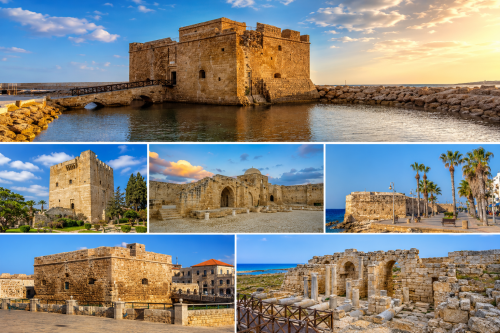
Cyprus may be best known for its golden beaches and crystal-clear waters, but the island also has a fascinating medieval heritage. Across its coastal cities and historic landscapes, impressive castles and fortress ruins reveal stories of Byzantine defenders, Crusader knights, Lusignan kings, Venetian engineers and Ottoman rulers. Some castles protected important harbours, while others served as military headquarters, royal residences, prisons or administrative centres. Today, these monuments offer travellers the opportunity to explore centuries of history while enjoying old towns, archaeological sites and beautiful Mediterranean scenery. For visitors interested in history, architecture, photography or cultural tourism, these five medieval castles in Cyprus deserve a place on the itinerary.
Why does Cyprus have so many historic fortifications?
Cyprus occupies a strategically important position between Europe, Asia and Africa. Throughout the centuries, control of the island meant control of valuable maritime and commercial routes in the eastern Mediterranean. The island passed through the hands of several major powers, including the Byzantines, Lusignans, Venetians and Ottomans. Each strengthened, rebuilt or adapted existing fortifications according to the military needs of the period. The castles that remain today therefore reflect several different chapters of Cypriot history rather than a single architectural style.
Kolossi Castle – The Stronghold of the Knights
Located approximately 14 kilometres west of Limassol, Kolossi Castle is one of the finest surviving examples of medieval military architecture in Cyprus. The original castle was constructed in the 13th century, while the imposing structure visitors see today largely dates from the 15th century. Following the fall of Acre in 1291, Kolossi became the centre of the Grand Commandery of the Knights of the Order of St John of Jerusalem. It was also associated for a period with the Knights Templar. The fortress controlled an agriculturally valuable area where sugar cane, vineyards and other crops were cultivated. Kolossi is particularly connected with Commandaria, the famous Cypriot dessert wine whose name is linked to the medieval commandery.
What to see at Kolossi Castle
- The impressive three-storey stone keep
- Narrow medieval stairways
- Former storage and residential rooms
- Panoramic views from the rooftop
- The remains of a medieval sugar mill nearby
The interior is relatively compact, but the height and thickness of the walls give a vivid impression of how formidable the castle once appeared.
Why visit the Kolossi Castle?
Kolossi Castle combines Crusader history, medieval architecture and Cyprus’ wine heritage in one easily accessible attraction. It is an excellent stop during an excursion through the Limassol countryside and the nearby wine-producing villages. Combine the castle with a visit to the ancient city of Kourion, the beaches west of Limassol or a Commandaria wine tasting.
Limassol Medieval Castle – A Royal Legend in the Old Town
Standing in the centre of Limassol’s historic quarter, Limassol Medieval Castle is surrounded by narrow streets, cafés, restaurants and restored stone buildings. According to tradition, this is where Richard the Lionheart married Berengaria of Navarre in 1191 and crowned her Queen of England. The precise history of the building is complex: medieval structures on the site were repeatedly damaged, altered and rebuilt, with the castle taking much of its present form under Ottoman rule. Today, the castle houses the Cyprus Medieval Museum, making it one of the most informative places on the island for visitors interested in the medieval period.
What to see inside Limassol Medieval Castle
The museum’s collection includes:
- Medieval weapons
- Pottery and ceramics
- Coins and crosses
- Stone carvings and tombstones
- Religious objects
- Artefacts from different periods of Cypriot history
Visitors can also explore the castle’s stone halls, stairways and former prison cells.
Why visit Limassol Medieval Castle
Limassol Castle offers much more than a single historical monument. Its central location makes it easy to combine with the Old Port, Limassol Marina, traditional restaurants and a walk through the old city. Allow time to explore the surrounding streets after visiting the museum. This is one of the best areas in Limassol for lunch or an evening walk.
Paphos Castle – The Historic Guardian of the Harbour
At the western end of Paphos Harbour stands one of the most recognisable landmarks in Cyprus: Paphos Castle. The site began as a Byzantine fortification created to defend the harbour. It was subsequently rebuilt by the Lusignans, dismantled by the Venetians and reconstructed by the Ottomans in the 16th century. The surviving structure is largely associated with the Ottoman restoration of 1592. Its compact square form may appear simple, but its position at the harbour entrance made it strategically important.
What to see during your visit at Paphos Castle
- The heavy stone walls and entrance
- Former ground-floor prison cells
- The central enclosed courtyard
- Battlements on the rooftop
- Panoramic views over the harbour and Mediterranean Sea
The rooftop is particularly attractive in the late afternoon, when the light softens and the harbour becomes one of the most atmospheric places in Paphos.
Why visit Paphos Castle
Paphos Castle is easy to include in a full day of sightseeing. It is within walking distance of waterfront restaurants and the UNESCO-listed Archaeological Park of Kato Paphos. Visit the castle before sunset, then continue with a walk along the harbour promenade and dinner overlooking the sea.
Larnaca Medieval Castle – History at the end of Finikoudes
Located at the southern end of the famous Finikoudes Promenade, Larnaca Medieval Castle is one of the city’s most accessible historical attractions. Its precise origins remain debated, although historical accounts connect its construction with the reign of the Lusignan king James I in the late 14th century, when Larnaca’s harbour became increasingly important. The fortress later took much of its present appearance during Ottoman rule. During the British period, the building was used as a prison, and parts of it continued to serve that purpose well into the 20th century. Today, the castle contains the Larnaca Medieval Museum, with exhibits covering Cyprus from the Early Christian period through the Ottoman era.
What to see at Larnaca Medieval Museum
- The stone courtyard
- Medieval and Ottoman architectural elements
- Archaeological artefacts
- Pottery and historical objects
- Views towards the sea and Finikoudes
Why visit Larnaca Medieval Castle
The castle’s excellent location makes it easy to combine with several of Larnaca’s most important attractions, including the Church of Saint Lazarus, the old Turkish quarter and the seafront. Begin at Saint Lazarus Church, walk through the old streets towards the castle and finish with coffee or lunch along Finikoudes.
Saranta Kolones – The Ruined Fortress of Ancient Paphos
Inside the Archaeological Park of Kato Paphos lie the dramatic ruins of Saranta Kolones, meaning “Forty Columns.” The Byzantine castle is believed to have been built near the end of the 7th century to protect the harbour and the city of Nea Paphos from Arab raids. It was later remodelled by the Lusignans. The name comes from the numerous granite columns found at the site, many of which were probably reused from earlier ancient buildings. The fortress once had thick defensive walls, eight towers, a moat and a wooden bridge leading to its entrance. It was destroyed by a powerful earthquake in 1223 and subsequently abandoned.
What remains today
Visitors can explore:
- Sections of the defensive walls
- Ruined towers and gateways
- Granite columns
- Stone arches
- Courtyards and underground areas
- Remains of the original fortress plan
Although Saranta Kolones is now a ruin rather than a complete castle, its layout helps visitors understand the scale and strength of medieval coastal defences.
Why visit Saranta Kolones Ruined Fortress
The fortress forms part of the wider UNESCO-listed Archaeological Park of Kato Paphos, where visitors can also see Roman villas, extraordinary mosaics, the ancient Odeon and other monuments spanning centuries of Cypriot history. Allow several hours for the entire archaeological park rather than visiting Saranta Kolones alone.
When is the best time to explore the castles?
Cyprus’ castles can be visited throughout the year, but spring and autumn usually provide the most comfortable conditions for walking and sightseeing. During summer, visit outdoor sites early in the morning or later in the afternoon, particularly in Paphos and Kolossi, where shade can be limited. Winter is also suitable for cultural holidays, with cooler temperatures and fewer visitors at many attractions.
Practical tips for visiting Cyprus’ medieval castles
Wear comfortable shoes, as castles frequently contain uneven stone floors, narrow stairs and rooftop areas. Carry water and sun protection during the warmer months. Some castle rooftops and upper levels may be difficult for visitors with reduced mobility. Photography is generally one of the highlights, particularly at Paphos Harbour, Kolossi and the archaeological ruins of Saranta Kolones.
Why the medieval castles of Cyprus are worth discovering
The castles of Cyprus reveal a side of the island that many beach-focused visitors never experience.
Together, they tell stories of:
- Byzantine coastal defence
- Crusader knights
- Lusignan kings
- Venetian military strategy
- Ottoman rule
- Maritime trade
- Royal legends
- Centuries of cultural exchange
Exploring them adds depth and variety to a Cyprus holiday, allowing travellers to combine history with old towns, archaeological parks, coastal promenades and traditional food.
Discover the Castles of Cyprus with Over Sun Aviation
At Over Sun Aviation, we believe that the best journeys reveal the stories behind a destination.
Our Cyprus itineraries can combine the island’s medieval castles with UNESCO World Heritage Sites, picturesque villages, archaeological treasures, traditional taverns and unforgettable Mediterranean landscapes.
Whether you are interested in history, architecture, photography or authentic cultural experiences, we can help you discover a side of Cyprus that goes far beyond its beautiful beaches.
Travel through centuries of history and discover the medieval castles of Cyprus with Over Sun Aviation.