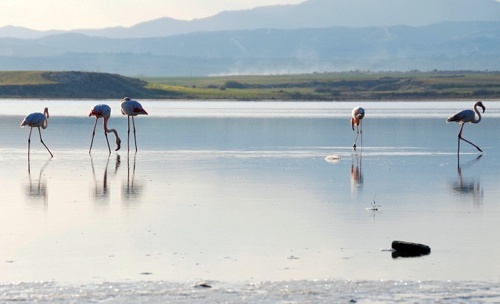
Larnaca Salt Lake, also known as Alyki, is one of the most picturesque and biologically diverse areas in Cyprus. Located just a short distance from Larnaca International Airport, the salt lake is renowned for its seasonal flocks of flamingos and its unique saline ecosystem. Whether you are a nature enthusiast, a birdwatcher, or simply looking for an unforgettable experience in Larnaca, this natural wonder is a must-visit destination.
A Unique Ecosystem
The Larnaca Salt Lake complex consists of four interconnected lakes—Alyki, Orphani, Soros, and Spiro—which cover an area of approximately 2.2 square kilometres. Together, they form a protected wetland that provides an important habitat for a wide variety of wildlife, including rare and migratory bird species.
During the winter months, the lakes fill with rainwater, creating ideal conditions for flamingos, herons, and numerous other waterbirds. As summer arrives, the water gradually evaporates, leaving behind a shimmering layer of salt crystals that glisten under the Mediterranean sun.
A Birdwatcher's Paradise
Larnaca Salt Lake is one of the most popular birdwatching destinations in Cyprus. Every winter, thousands of Greater Flamingos arrive to feed on the tiny brine shrimp and other organisms that thrive in the lake's salty waters. Their elegant pink silhouettes against the tranquil landscape create one of the island's most spectacular natural sights.
In addition to flamingos, the lake is home to many other bird species, including Black-winged Stilts, wild geese, ducks, herons, and various migratory birds. The ecological importance of the wetland has been recognised under the Ramsar Convention on Wetlands, and it is also designated as a Natura 2000 protected area, ensuring the conservation of this unique habitat for future generations.
Historical and Cultural Significance
Larnaca Salt Lake has played an important role throughout Cyprus' history. During the Middle Ages, it was one of the island's principal sources of salt, which became one of Cyprus' most valuable export commodities. Commercial salt harvesting continued until the 20th century, and traces of this historic industry can still be found around the lake today.
Adjacent to the lake stands the Hala Sultan Tekke Mosque, one of the most important Islamic pilgrimage sites in the world. The close proximity of this sacred monument to the lake adds both cultural and historical significance to the area, making it a destination where nature and heritage come together.
When and How to Visit Larnaca Salt Lake
Larnaca Salt Lake can be visited throughout the year, with each season offering a unique experience.
Winter (December–March): The lake is full of water and attracts thousands of flamingos and other migratory birds, making it the ideal season for birdwatching and photography.
Spring (April–June): The surrounding countryside comes alive with colourful wildflowers, while the lake still holds water and some bird species remain in the area.
Summer (July–September): The lake dries out completely, revealing a brilliant white salt crust that sparkles beneath the sun. Although the flamingos have departed, the stark beauty of the salt flats creates an unforgettable landscape.
Autumn (October–November): As the first rains arrive, the lake begins to refill, and early migratory birds gradually return.
Why Visit Larnaca Salt Lake?
A visit to Larnaca Salt Lake offers a unique opportunity to experience the natural beauty and rich heritage of Cyprus. Whether you are captivated by the sight of graceful flamingos, interested in the lake's historical importance, or simply looking for a peaceful place to enjoy a scenic walk, this remarkable destination has something to offer every visitor.
As one of Larnaca's most iconic attractions, Larnaca Salt Lake perfectly combines nature, history, and culture. Be sure to include it in your itinerary for an unforgettable journey through one of Cyprus' most treasured natural landmarks.