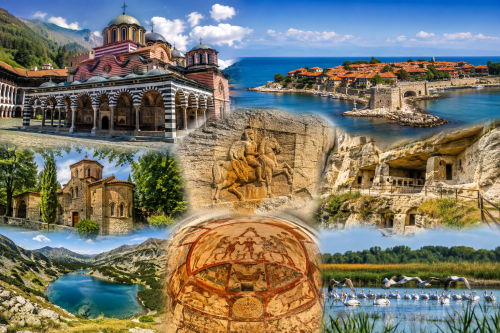
Bulgaria is one of Europe’s most fascinating destinations for travellers who want to combine history, culture, nature, architecture, and authentic local experiences. From ancient Thracian tombs and medieval monasteries to picturesque Black Sea towns and spectacular mountain landscapes, Bulgaria is home to an impressive collection of UNESCO World Heritage Sites. Bulgaria is home to 10 UNESCO World Heritage Sites, showcasing the country’s remarkable cultural heritage and natural beauty. Nine of these are especially notable as destinations within Bulgaria itself, while the Ancient and Primeval Beech Forests of the Carpathians and Other Regions of Europe is a transnational natural heritage property that also includes Bulgarian forest areas.
If you are planning a trip to Bulgaria and want to experience the country's most important historical and natural treasures, these UNESCO sites in Bulgaria should be high on your travel itinerary.
Rila Monastery
Located in the beautiful Rila Mountains, Rila Monastery is one of Bulgaria's most famous landmarks and one of the country's most important cultural and religious monuments. Founded in the 10th century and associated with St. Ivan of Rila, the monastery has played an important role in Bulgarian spiritual and cultural history for centuries. Its spectacular location, surrounded by forested mountains, makes the journey there just as memorable as the monastery itself. Visitors can admire the monastery's distinctive architecture, colorful frescoes, religious artwork, and peaceful courtyard. The surrounding Rila Mountains also offer opportunities for hiking and exploring some of Bulgaria's most impressive natural scenery.
Why visit Rila Monastery
Rila Monastery is an excellent choice for travelers interested in Bulgarian history, Orthodox Christianity, architecture, photography, and mountain landscapes.
Ancient City of Nessebar
The Ancient City of Nessebar is one of Bulgaria's most beautiful and popular UNESCO World Heritage Sites. Located on a rocky peninsula on the Black Sea, Nessebar has a history stretching back more than 3,000 years. Originally a Thracian settlement, it later became a Greek colony and developed into an important Byzantine and medieval Christian center. Today, visitors can walk through narrow cobblestone streets surrounded by historic houses, ancient ruins, churches, stone walls, and traditional Bulgarian Revival architecture. Nessebar is particularly appealing because it combines history and seaside tourism. You can spend the morning exploring ancient ruins and medieval churches before enjoying the beaches and restaurants along the Bulgarian Black Sea coast.
Why visit Nessebar
It is ideal for travellers who want to combine Bulgarian history, architecture, seaside scenery, traditional food, and a relaxed holiday atmosphere.
Boyana Church
Situated on the outskirts of Sofia, Boyana Church is one of the most important medieval monuments in Bulgaria. The church is particularly famous for its remarkable medieval frescoes, which are considered outstanding examples of Eastern European medieval art. The complex consists of three buildings dating from different periods, creating a fascinating picture of the development of Bulgarian medieval architecture.
For visitors staying in Sofia, Boyana Church is one of the easiest UNESCO World Heritage Sites to include in a Bulgarian itinerary.The church is also located near Vitosha Mountain, allowing travelers to combine cultural sightseeing with nature and mountain excursions.
Why visit Boyana Church
Boyana Church is a must-see for art lovers, history enthusiasts, photographers, and travellers exploring Sofia.
Madara Rider
The Madara Rider is one of Bulgaria's most unique historical attractions. Carved into a nearly vertical rock face near the village of Madara, the relief depicts a mounted horseman accompanied by a dog and other figures. It dates to the early medieval period and is closely associated with the history of the First Bulgarian Empire. The monument is part of the wider Madara archaeological area, where visitors can explore ancient remains and enjoy views of the surrounding landscape.
The Madara Rider is particularly interesting because it provides a glimpse into Bulgaria's early medieval history and the development of the Bulgarian state.
Why visit Madara Rider
It is an excellent destination for travellers interested in archaeology, medieval Bulgaria, ancient monuments, and unusual historical landmarks.
Rock-Hewn Churches of Ivanovo
The Rock-Hewn Churches of Ivanovo are a remarkable group of medieval churches, chapels, monasteries, and cells carved directly into the limestone cliffs of the Rusenski Lom River valley. The complex is especially famous for its preserved medieval frescoes and unusual setting. Instead of conventional buildings standing on the ground, many of the religious spaces were created within caves and rock formations. Walking through the area provides a completely different experience from visiting Bulgaria's traditional churches and monasteries.
Why visit the Rock-Hewn Churches of Ivanovo
The site is perfect for travellers interested in medieval history, religious heritage, archaeology, architecture, and dramatic natural landscapes.
Thracian Tomb of Kazanlak
Bulgaria's history stretches far beyond the medieval period, and the Thracian Tomb of Kazanlak offers an extraordinary insight into the ancient Thracian civilization. Located near the town of Kazanlak, the tomb dates to the 4th century BC and is famous for its exceptionally well-preserved wall paintings. The artwork provides valuable information about Thracian funeral traditions, beliefs, clothing, ceremonies, and artistic culture. Because of the fragility of the original monument, visitors typically experience a replica, while the original tomb is carefully protected. The surrounding region is also known as the Valley of the Thracian Kings, making Kazanlak an excellent base for travellers interested in Bulgaria's ancient history.
Why visit Thracian Tomb of Kazanlak
This is one of the best UNESCO sites in Bulgaria for discovering the country's ancient Thracian heritage.
Thracian Tomb of Sveshtari
Another extraordinary reminder of Bulgaria's Thracian past is the Thracian Tomb of Sveshtari, located in northeastern Bulgaria. Discovered in 1982, this 3rd-century BC tomb is particularly remarkable for its unusual interior decoration. Ten female figures, combining human and plant forms, are carved in relief inside the central chamber. The tomb also contains painted decoration and reflects the artistic influences that connected Thracian culture with the wider ancient world. The tomb is located within the archaeological reserve of Sboryanovo, an area containing numerous archaeological remains and burial mounds.
Why visit Thracian Tomb of Sveshtari
Sveshtari is a fascinating destination for travellers who want to discover ancient Thracian civilization away from Bulgaria's better-known tourist routes.
Pirin National Park
UNESCO heritage in Bulgaria is not limited to historic monuments. Pirin National Park is one of the country's most spectacular natural destinations. Located in southwestern Bulgaria, the park encompasses dramatic mountain scenery, alpine meadows, forests, peaks, and glacial lakes. It is particularly popular with hikers and outdoor enthusiasts. The Pirin Mountains are home to diverse plant and animal species, while the landscape offers some of the most impressive hiking opportunities in Bulgaria. The nearby mountain resort of Bansko is a popular base for exploring the region and can easily be incorporated into a wider Bulgaria itinerary.
Why visit Pirin National Park
Pirin National Park is a must for hikers, nature lovers, photographers, and anyone looking for Bulgaria's most spectacular mountain scenery.
Srebarna Nature Reserve
For wildlife enthusiasts, the Srebarna Nature Reserve offers a completely different UNESCO experience. Located near the Danube River in northeastern Bulgaria, Srebarna is a freshwater lake and wetland area that provides an important habitat for numerous bird species. The reserve is especially famous for its birdlife, including the Dalmatian pelican, making it an interesting destination for birdwatchers and nature photographers. Srebarna demonstrates that Bulgaria's UNESCO heritage extends beyond historic monuments and includes important natural ecosystems.
Why visit Srebarna Nature Reserve
It is an excellent destination for wildlife watching, bird photography, nature tourism, and travellers interested in Bulgaria's wetlands.
Ancient and Primeval Beech Forests
Bulgaria is also part of the UNESCO Ancient and Primeval Beech Forests of the Carpathians and Other Regions of Europe, a large transnational natural heritage property spanning multiple European countries. These forests represent exceptional examples of relatively undisturbed European beech ecosystems and demonstrate the natural expansion and ecological importance of beech forests across the continent. Unlike the other Bulgarian UNESCO sites on this list, this is a transnational serial World Heritage property, meaning it is shared across several countries rather than being an exclusively Bulgarian attraction. For travelers interested in forests, hiking, biodiversity, and sustainable tourism, Bulgaria's protected beech forests provide another opportunity to experience the country's natural heritage.
Why Visit UNESCO World Heritage Sites in Bulgaria
One of the biggest advantages of exploring Bulgaria's UNESCO sites is the incredible variety of experiences they provide.
You can:
- Explore ancient Thracian tombs dating back thousands of years.
- Discover medieval churches and monasteries.
- Walk through the historic streets of Nessebar.
- Admire spectacular mountain scenery in Pirin National Park.
- Explore rock-hewn religious complexes.
- Discover important wildlife habitats.
- Learn about Bulgaria's medieval kingdoms and ancient civilizations.
- Combine cultural sightseeing with beaches, hiking, food, and local traditions.
Bulgaria's UNESCO heritage also makes it possible to create an itinerary that goes far beyond the country's major cities.
Best UNESCO Sites in Bulgaria for Different Types of Travelers
Best for history lovers
Rila Monastery, Thracian Tomb of Kazanlak, Thracian Tomb of Sveshtari, and Madara Rider are excellent choices for travelers fascinated by Bulgaria's past.
Best for architecture and art
Boyana Church, Rila Monastery, Rock-Hewn Churches of Ivanovo, and Nessebar offer remarkable examples of Bulgarian religious and residential architecture.
Best for nature lovers
Pirin National Park, Srebarna Nature Reserve, and Bulgaria's ancient beech forests are ideal for travelers looking for wildlife, mountains, forests, and outdoor experiences.
Best for a seaside holiday
Nessebar is the obvious choice. Its UNESCO-listed historic center can be combined with Bulgaria's Black Sea beaches, restaurants, and resorts.
Best UNESCO site near Sofia
Boyana Church is the easiest UNESCO World Heritage Site to combine with a stay in Bulgaria's capital.
Bulgaria may be relatively small compared with many European countries, but its UNESCO heritage is remarkably diverse. From the ancient Thracians and medieval Bulgarian rulers to Orthodox monasteries, historic Black Sea towns, mountain ecosystems, and important wetlands, the country's World Heritage Sites reveal the many layers of Bulgarian history and nature.
Whether you are planning your first trip to Bulgaria or returning to explore beyond Sofia, adding UNESCO World Heritage Sites to your itinerary is one of the best ways to discover the country's cultural and natural treasures.
From the spectacular Rila Monastery and historic Nessebar to the mysterious Thracian tombs and breathtaking Pirin National Park, Bulgaria offers unforgettable experiences for every type of traveller.
Discover Bulgaria’s UNESCO Treasures with Over Sun Aviation
At Over Sun Aviation, we believe that exploring Bulgaria means discovering the extraordinary history, culture and natural beauty that have shaped the country over thousands of years. From the magnificent Rila Monastery and the ancient streets of Nessebar to mysterious Thracian tombs and the spectacular landscapes of Pirin National Park, Bulgaria’s UNESCO World Heritage Sites offer unforgettable experiences for every type of traveller.
Whether you are passionate about history, archaeology, architecture, nature or authentic cultural experiences, we can help you create the perfect journey through Bulgaria, combining its UNESCO treasures with traditional cuisine, charming towns, mountain landscapes and the beautiful Black Sea coast.
Travel through centuries of history and discover Bulgaria’s remarkable UNESCO heritage with Over Sun Aviation.